
A service page should help a customer decide whether your business handles their type of job and what to do next. Before writing the page, collect the practical answers your team gives when someone phones or emails for the first time.
This guide focuses on preparing one service page at a time for a Carlow business. It includes a worked planning example, an evidence record and a copyable brief you can give your designer or copywriter.
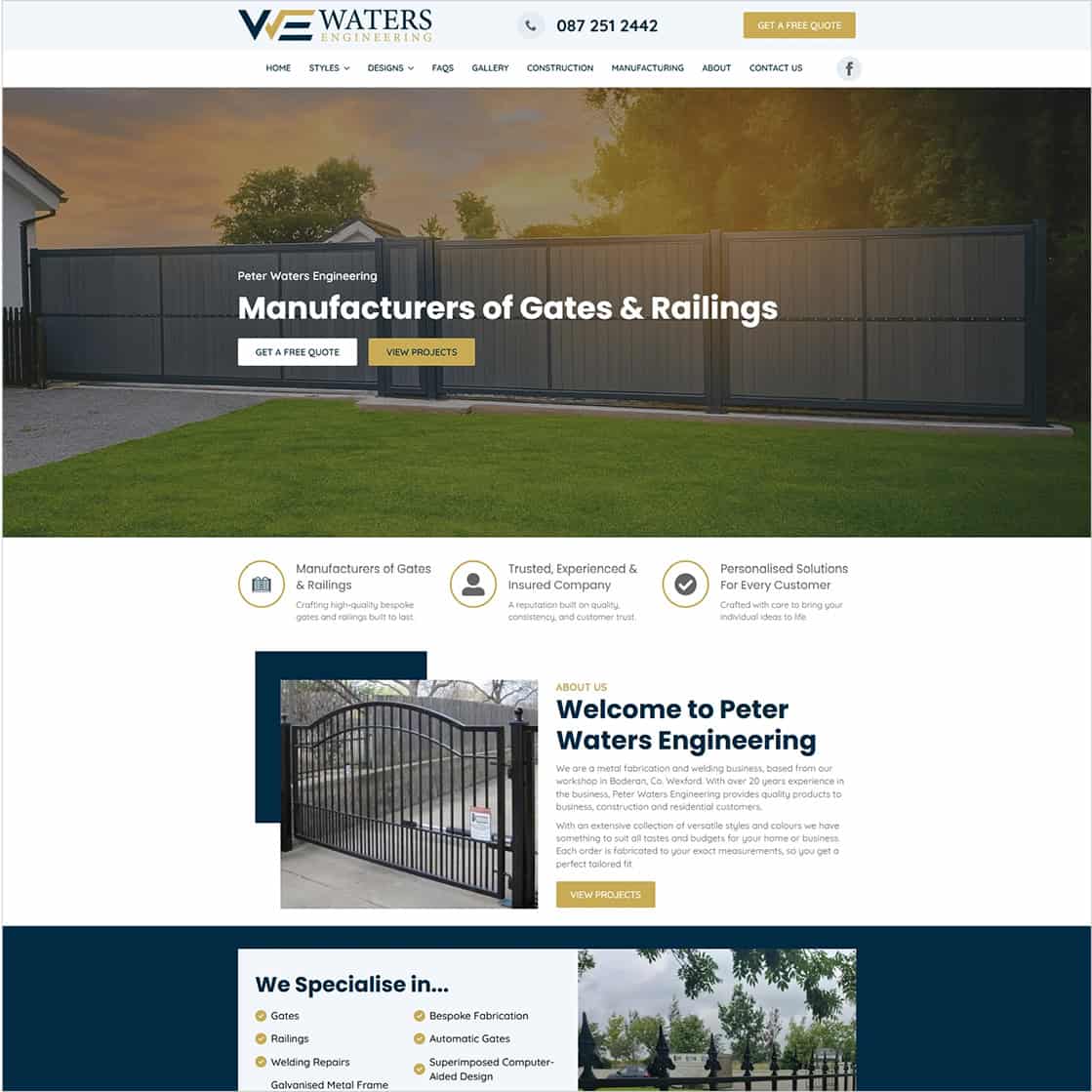
Project pictured: Waters Engineering, Boderan, Co. Wexford. Website design: Diskin Design. Website build: Istech.
Plan your page:
Start with a real enquiry your business is equipped to handle. Write down what the person needs, what they may already know and what they must confirm before contacting you. A customer arranging a new installation may need different information from someone asking about a repair.
Use those differences to decide whether services need separate pages. A separate page is useful when there are distinct questions, requirements or examples to explain. Agree the page list before preparing every paragraph; our Carlow web design service explains the wider planning process.
Ask the person who delivers the work to approve a short scope note. Identify the customers and job types you can help, the work included and any important exclusions. Say when a site visit, inspection or further discussion is needed before confirming a quotation.
Prepare the information that applies to your service:
If a price depends on dimensions, materials or access, explain which details are needed to discuss it. Do not fill gaps with an invented starting price, turnaround or guarantee. Our website pricing guide applies the same principle when defining a website project’s scope.
The live Waters Engineering website describes a metal fabrication and welding business based in Boderan, Co. Wexford. It presents gates and railings alongside services including welding repairs and bespoke fabrication, and names Carlow within its South-East coverage.
Its website footer credits Diskin Design for design and Istech for the build. Read the published Waters Engineering project article for background. The example here concerns the information visible on the website, not measured changes in enquiries or rankings.
These are sample prompts to discuss with a service provider, not a statement of Waters Engineering’s quotation requirements:
The planning lesson is to collect questions for the actual job. A repair page may need to explain assessment and suitability; a new-installation page may need to explain choices and preparation. Have the business approve those details before they become public instructions.
Choose photographs and examples that relate to the service being discussed. For each item, record what it shows, the business’s actual role, the caption, permission to use it and any design, photography or project credit that must accompany it.
A useful evidence record includes:
A photograph does not establish a qualification, performance figure or customer outcome by itself. Keep claims within what the accompanying evidence supports. If using a testimonial, retain the approved quotation and attribution accurately.
Explain where the service is available and any practical limits. A business based outside Carlow can describe work it genuinely provides in the county without implying that it has a Carlow office.
Do not create a series of nearly identical pages with only the town name changed. Google’s spam policies describe doorway abuse and keyword stuffing. A location page needs a useful reason to exist for the reader; copying a service description across place names does not supply that reason.
For businesses that visit customers, keep residential address privacy separate from service coverage. Our Carlow Business Profile setup guide explains the distinction between shopfront, service-area and hybrid arrangements.
Choose the main action: call, request a quote, arrange a consultation or follow the agreed booking route. Tell the customer which details to have ready and describe what happens next using wording your team can support.
Link to related project examples and contact instructions where they help someone make that decision. Check the phone and email destinations, then review the page on a phone as well as a desktop. If a form is included, agree its fields, recipient and confirmation wording, and test delivery before launch.
Write headings that describe the information beneath them. Google’s helpful content guidance asks whether a page offers original, reliable information and satisfies the reader’s needs. There is no need to stretch a brief to an arbitrary word count or promise a particular search position.
Complete these prompts in a working document. Mark missing information and assign someone to supply or approve it.
Decide who reviews changed services, coverage, photographs and contact instructions. The Carlow handover checklist can help record the editing tasks and responsibilities your team will take on.
Content preparation and future page changes should be included in the agreed scope or quoted separately. Our Website Maintenance & Care Plans page states the maintenance boundary:
Please note: content changes (text edits, new images, new pages or layout changes) are not included in maintenance plans and are quoted separately. This keeps the plans focused on technical upkeep and site stability.
We will agree exactly what is included before you start, so you know what you are getting for your yearly fee.
Send Istech an outline of your services and the pages you want to prepare. We can use the brief to discuss the content, examples and website work required before agreeing a scope.